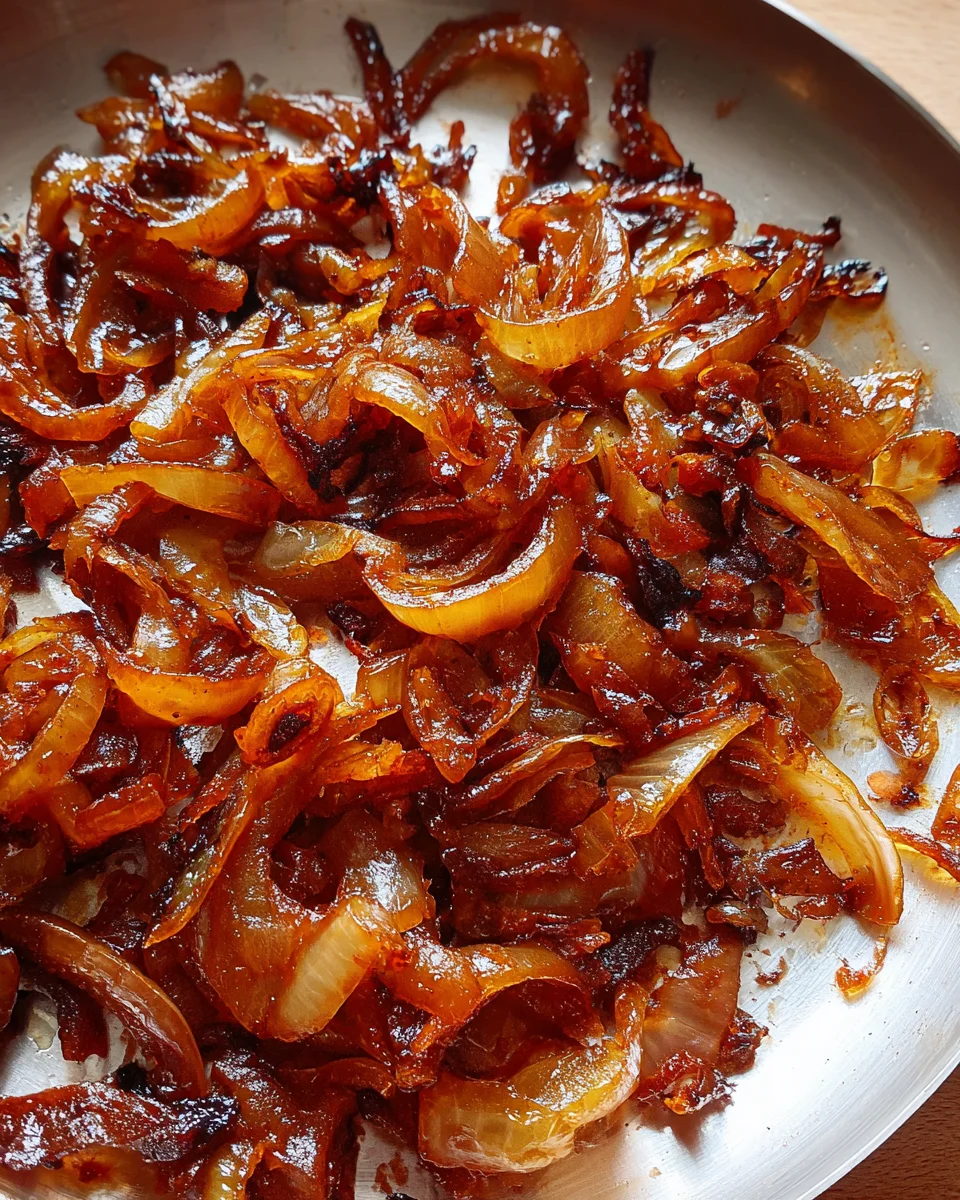
The appeal of caramelized onions lies in their rich, sweet flavor and versatility in various dishes. Perfect for elevating meals, they can transform everything from a simple burger to gourmet French onion soup. This recipe showcases the art of caramelizing onions, ensuring that you achieve that perfect balance of sweetness and savory goodness every time.
Jump to:
- Why You’ll Love This Recipe
- Tools and Preparation
- Essential Tools and Equipment
- Importance of Each Tool
- Ingredients
- For Caramelized Onions
- How to Make Caramelized Onions
- Step 1: Heat the Oil
- Step 2: Add Salt and Reduce Heat
- Step 3: Cook Until Softened
- Step 4: Finish with Balsamic Vinegar
- Amazon's Best Seller Pasta Bowls Are Almost Gone!
- How to Serve Caramelized Onions
- On Top of Burgers
- In Quiches
- As a Pizza Topping
- Mixed into Mashed Potatoes
- In Sandwiches or Wraps
- With Grilled Meats
- How to Perfect Caramelized Onions
- Best Side Dishes for Caramelized Onions
- Common Mistakes to Avoid
- Storage & Reheating Instructions
- Refrigerator Storage
- Freezing Caramelized Onions
- Reheating Caramelized Onions
- Frequently Asked Questions
- How do I know when my caramelized onions are done?
- Can I use any type of onion for caramelizing?
- What dishes can I use caramelized onions in?
- How do I store leftover caramelized onions?
- Final Thoughts
- 📖 Recipe Card
- Amazon's Best Seller Pasta Bowls Are Almost Gone!
Why You’ll Love This Recipe
- Easy to Make – With just a few ingredients and simple steps, you can create a delicious component for any meal.
- Versatile Ingredient – Use caramelized onions in quiches, tarts, or as a topping for meats and vegetables.
- Rich Flavor – The slow cooking process brings out the natural sugars in the onions, creating a deep, caramelized taste that enhances any dish.
- Perfect for Meal Prep – Make a batch ahead of time and store them for quick additions to your meals throughout the week.
- Healthy Option – Low in calories yet packed with flavor, these onions can boost your dishes without adding unhealthy ingredients.
Tools and Preparation
Before getting started with caramelized onions, it’s important to have the right tools on hand. These will help ensure an efficient cooking process and perfect results.
Essential Tools and Equipment
Importance of Each Tool
- Large skillet – A spacious skillet allows onions to cook evenly while providing ample surface area for browning.
- Spatula – A sturdy spatula is essential for stirring the onions gently without breaking them apart.
Ingredients
For Caramelized Onions
- 2 tablespoons olive oil
- 3 onions (medium or large, sliced)
- pinch of salt
- 1 tablespoon balsamic vinegar
How to Make Caramelized Onions
Step 1: Heat the Oil
- Heat 2 tablespoons olive oil on high heat in a large skillet.
- Once the oil is heated, add sliced onions and cook on high heat for about 10 minutes.
- Stir constantly with the spatula to prevent burning. The onions should start to brown but not char.
Step 2: Add Salt and Reduce Heat
- Reduce heat to medium after 10 minutes.
- Continue cooking onions for another 10 minutes while stirring regularly.
- Sprinkle just a pinch of salt over the onions at this stage.
Step 3: Cook Until Softened
- Continue cooking the onions for an additional 10 minutes on medium or low heat.
- Stir occasionally to ensure they do not stick or burn; add water if necessary.
Step 4: Finish with Balsamic Vinegar
- Remove from heat once the total cooking time reaches 30 minutes.
- Sprinkle a small amount of balsamic vinegar over the cooked onions to deglaze the pan.
- Mix well using your spatula, scraping any bits from the bottom of the pan.
Enjoy your perfectly caramelized onions as a delightful addition to various dishes!
Amazon's Best Seller Pasta Bowls Are Almost Gone!
How to Serve Caramelized Onions
Caramelized onions are a delightful addition to many dishes, adding a rich, sweet flavor. Here are some excellent ways to serve them.
On Top of Burgers
- Juicy beef or veggie burgers topped with caramelized onions create a savory experience that enhances every bite.
In Quiches
- Add caramelized onions to your quiche for a rich flavor that pairs beautifully with cheese and eggs.
As a Pizza Topping
- Spread caramelized onions over pizza dough before adding cheese and other toppings for an extra layer of sweetness.
Mixed into Mashed Potatoes
- Stirring caramelized onions into mashed potatoes adds depth and complexity, making this classic side dish truly special.
In Sandwiches or Wraps
- Use caramelized onions in sandwiches or wraps for added flavor; they complement turkey, ham, or grilled vegetables perfectly.
With Grilled Meats
- Serve caramelized onions alongside grilled meats like steak or chicken for a delicious contrast of flavors.
How to Perfect Caramelized Onions
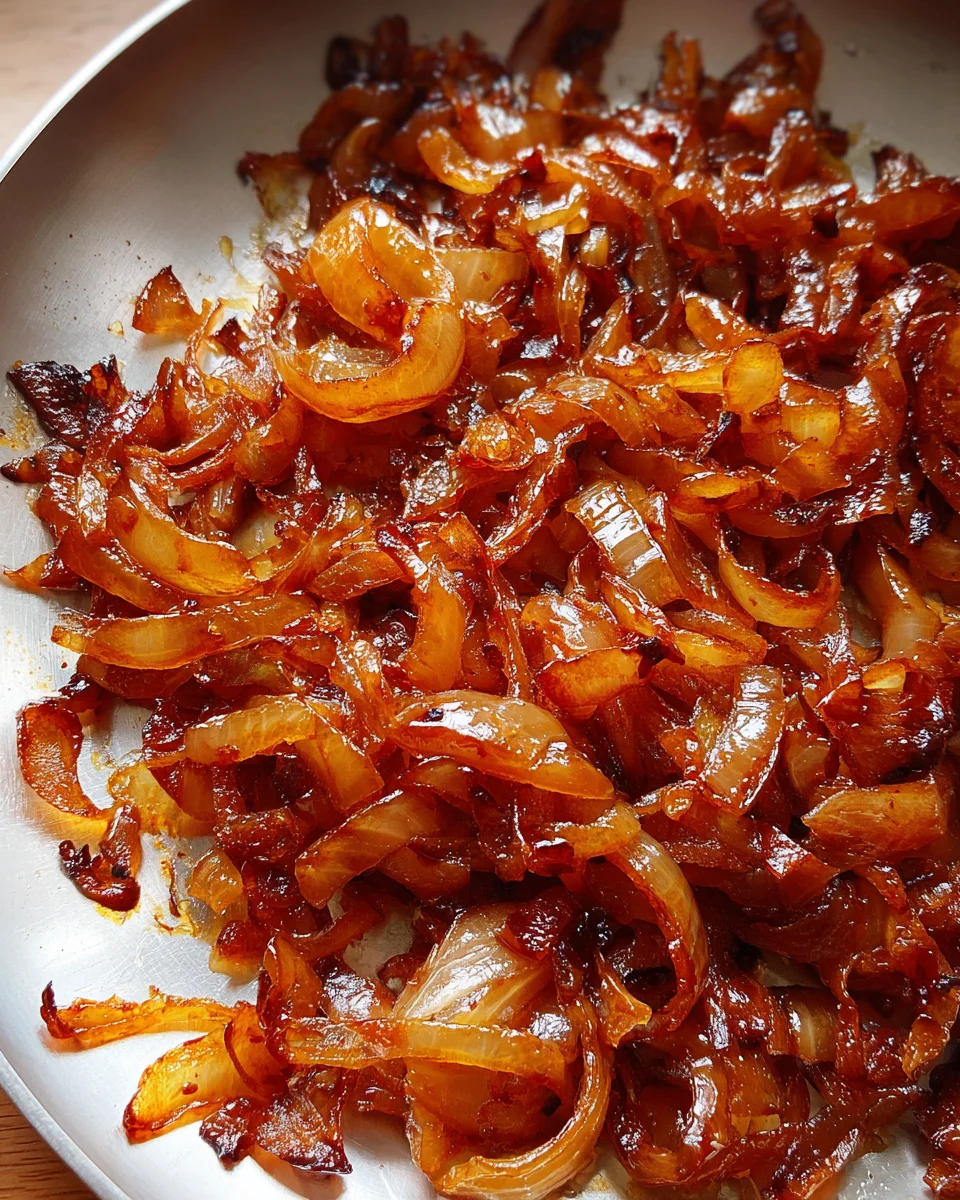
Perfecting caramelized onions takes practice and patience. Follow these tips to achieve the best results.
- Use the right pan: A wide, heavy skillet helps distribute heat evenly, allowing onions to cook properly without burning.
- Patience is key: Cooking slowly on medium heat ensures that the sugars in the onions caramelize beautifully without charring.
- Add salt at the right time: Sprinkling salt early helps draw out moisture but adding it later can enhance flavor without hindering browning.
- Deglaze for flavor: Using balsamic vinegar at the end lifts any stuck bits from the pan, enriching the overall taste of your caramelized onions.
- Experiment with different types of onions: Yellow onions are classic for sweetness, but red or white onions can offer unique flavors as well.
- Don’t overcrowd the pan: If you’re cooking large quantities, do it in batches to ensure even cooking and browning.
Best Side Dishes for Caramelized Onions
Caramelized onions pair wonderfully with various side dishes. Here are some perfect options:
-
Roasted Brussels Sprouts
The slight bitterness of roasted Brussels sprouts complements the sweetness of caramelized onions well. -
Garlic Mashed Potatoes
Creamy garlic mashed potatoes topped with caramelized onions create a comforting and flavorful dish. -
Grilled Asparagus
The charred taste of grilled asparagus pairs nicely with sweet, soft caramelized onions. -
Quinoa Salad
Mix quinoa with fresh herbs and top it off with warm caramelized onions for a hearty salad. -
Sautéed Spinach
Quickly sautéed spinach mixed with caramelized onions makes for a nutritious side full of flavor. -
Cornbread Muffins
Sweet cornbread muffins served alongside caramelized onion dishes provide a delightful contrast in flavors.
Common Mistakes to Avoid
When learning how to caramelize onions, it’s easy to make a few common mistakes that can affect the final result. Here are some pitfalls to watch for:
- Using high heat: Cooking onions over high heat may brown them too quickly, leading to burnt bits. Always start on high heat but reduce it after the initial browning.
- Skipping the stirring: Neglecting to stir the onions can cause uneven cooking and burning. Stir frequently to ensure even caramelization.
- Not using enough fat: Insufficient olive oil can lead to sticking and uneven cooking. Use the recommended amount of oil for best results.
- Rushing the process: Caramelizing onions takes time. Don’t rush it; patience is key for achieving that sweet, deep flavor.
- Ignoring salt: Adding salt early helps draw out moisture and enhances flavor. Don’t skip this step during cooking.
Storage & Reheating Instructions
Refrigerator Storage
- Store caramelized onions in an airtight container.
- They will last up to 5 days in the refrigerator.
Freezing Caramelized Onions
- Use freezer-safe containers or bags.
- Frozen caramelized onions can last up to 3 months.
Reheating Caramelized Onions
- Oven: Preheat your oven to 350°F (175°C) and place onions in a covered dish until heated through.
- Microwave: Heat in short bursts, stirring in between until warm.
- Stovetop: Warm them on low heat in a skillet, adding a splash of water if necessary.
Frequently Asked Questions
Here are some common questions about caramelized onions that might help you perfect your technique.
How do I know when my caramelized onions are done?
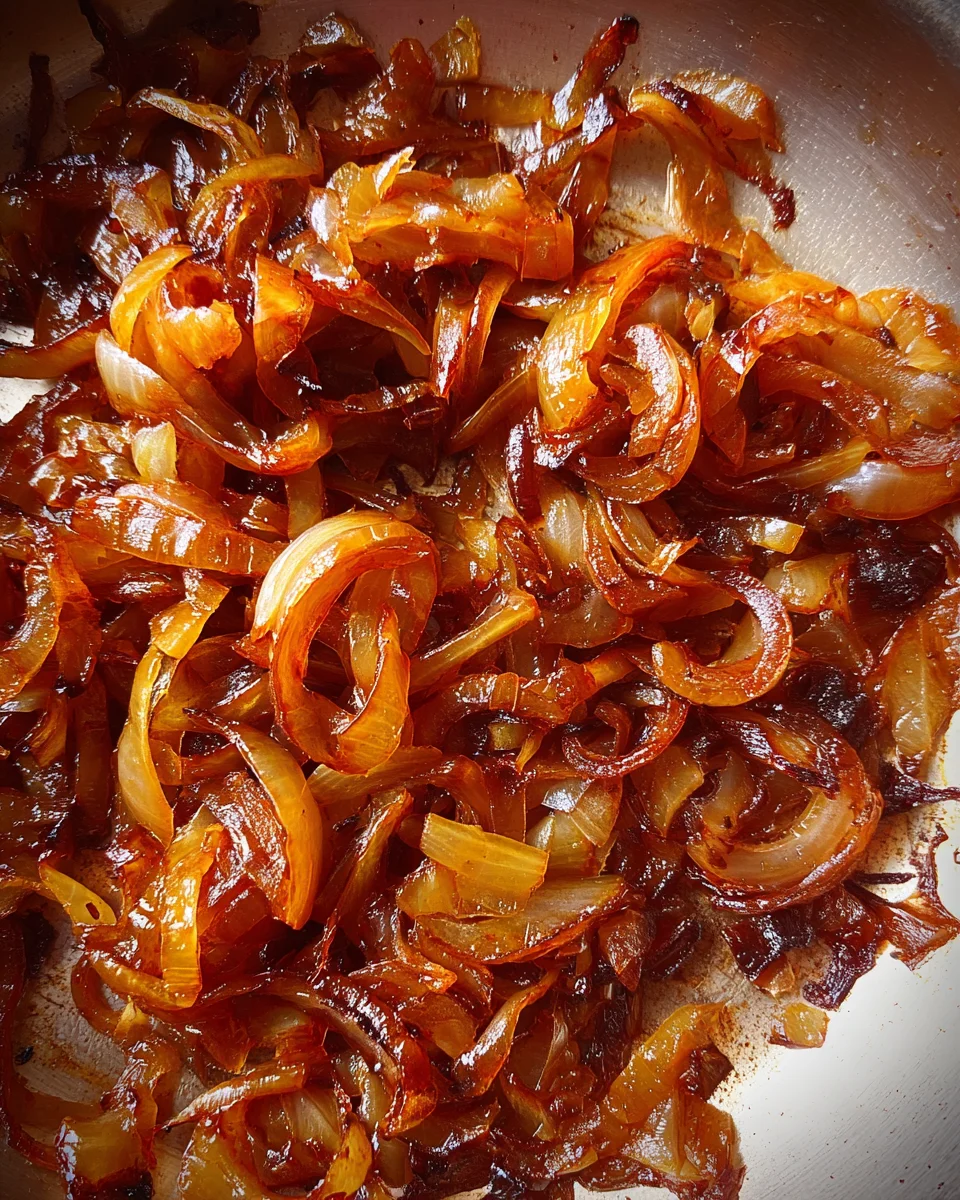
Caramelized onions should be golden brown and soft, with a sweet aroma. This usually takes around 30 minutes of cooking.
Can I use any type of onion for caramelizing?
Yes, while yellow onions are most common due to their sweetness, red and white onions can also be used for different flavors.
What dishes can I use caramelized onions in?
You can add caramelized onions to quiches, soups, burgers, or even as a topping for pizzas—endless possibilities!
How do I store leftover caramelized onions?
Store them in an airtight container in the refrigerator for up to 5 days or freeze them for longer storage.
Final Thoughts
Caramelized onions bring a delightful sweetness and depth of flavor that can elevate any dish. Their versatility allows you to customize them based on your preferences or what you have on hand. Give this recipe a try and enjoy experimenting with these delicious additions!
Did You Enjoy Making This Recipe? Please rate this recipe with ⭐⭐⭐⭐⭐ or leave a comment.
📖 Recipe Card
Print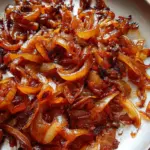
Caramelized Onions
- Total Time: 35 minutes
- Yield: Approximately 4 servings 1x
Description
Caramelized onions are a culinary delight that can transform any dish with their rich, sweet flavor and savory depth. The slow cooking process allows the natural sugars in the onions to develop beautifully, creating a versatile ingredient perfect for burgers, quiches, pizzas, and more. This simple recipe will guide you through the art of caramelizing onions, ensuring you achieve perfectly golden, tender results every time. Whether you’re looking to elevate your everyday meals or impress guests at a dinner party, caramelized onions are an essential addition to your kitchen repertoire.
Ingredients
- 2 tablespoons olive oil
- 3 medium or large onions (sliced)
- Pinch of salt
- 1 tablespoon balsamic vinegar
Instructions
- Heat olive oil in a large skillet over high heat. Add sliced onions and cook for about 10 minutes, stirring constantly until they start to brown.
- Reduce heat to medium, sprinkle a pinch of salt over the onions, and continue cooking for another 10 minutes while stirring regularly.
- Lower the heat to medium-low and cook for an additional 10 minutes, stirring occasionally and adding water if necessary to prevent sticking.
- Once caramelized, remove from heat and add balsamic vinegar, mixing well to deglaze the pan.
- Prep Time: 5 minutes
- Cook Time: 30 minutes
- Category: Side Dish
- Method: Sautéing
- Cuisine: Various
Nutrition
- Serving Size: 1/4 cup (60g)
- Calories: 80
- Sugar: 6g
- Sodium: 20mg
- Fat: 5g
- Saturated Fat: 0.7g
- Unsaturated Fat: 4g
- Trans Fat: 0g
- Carbohydrates: 9g
- Fiber: 1g
- Protein: 1g
- Cholesterol: 0mg